

Which of these happen to you?
Every one of these is a sign your moisturizer is adding hydration but not holding it. The good news: that's fixable. Keep reading.
I did everything right. My skin still quit by lunch.
Every morning for twenty-plus years, I moisturized. I never skipped. I paid for the jars that promised "deep, lasting hydration."
And every day, somewhere around noon, it came back. The tightness across my cheeks. The fine lines that looked deeper under the office lights. That pulling feeling when I smiled.
I blamed my age. I blamed my skin type. I bought richer creams, which just felt greasy at 9 a.m. and were gone by 12 anyway.
It turns out my skin was never the problem. My moisturizer was doing half its job.
Your moisturizer has two jobs. Most only do one.
A moisturizer is supposed to add water to your skin and hold it there. Almost every formula is great at the first job. You feel it at 8 a.m.: plump, soft, comfortable. But without something holding that water in place, it simply evaporates off the surface. By late morning you're right back where you started.
Add hydration
Draws water into your skin. Most moisturizers do this.
Hold it all day
Keeps that water from evaporating. Almost none do this.
Meet Saccharide Isomerate, the "lid" your moisturizer is missing.
You've heard of hyaluronic acid. It's brilliant at pulling water into your skin. Think of it as filling the glass.
Saccharide Isomerate is the lid on the glass. This clinically studied, plant-derived hydrator mimics your skin's own natural moisturizing factors and binds to the skin, so the water stays put. That's how it delivers 12-hour sustained moisture instead of a two-hour high.
It's the difference between a moisturizer you feel at breakfast, and one you still feel at dinner.
Rich results. Weightless feel.
Most "long-lasting" creams get there by being thick, and thick means greasy. Zafra uses Squalane instead: a plant-derived, non-comedogenic oil that's structurally similar to your skin's own natural oils. Your skin recognizes it, so it melts in, seals the hydration underneath, and leaves nothing behind. No film. No shine. Nothing on your phone screen.

A luxury-level formula for $30.
Then I read the rest of the label. Alongside the hydration duo sits Acetyl Hexapeptide-37, a premium-grade firming peptide rarely found in skincare at this price, plus a tone-and-antioxidant complex and two classic soothers.

How it stacks up
| What you get | Typical moisturizer | Zafra |
|---|---|---|
| Adds hydration | ✓ | ✓ |
| Holds it for up to 12 hours | Rarely | ✓ Saccharide Isomerate |
| Light, non-greasy feel | Often heavy | ✓ Squalane |
| Firming peptide | Usually luxury-priced | ✓ Acetyl Hexapeptide-37 |
| Tone + antioxidant care | Sometimes | ✓ Niacinamide, Vit C & E |
| No parabens or sulfates | Varies | ✓ |
What happened when I switched
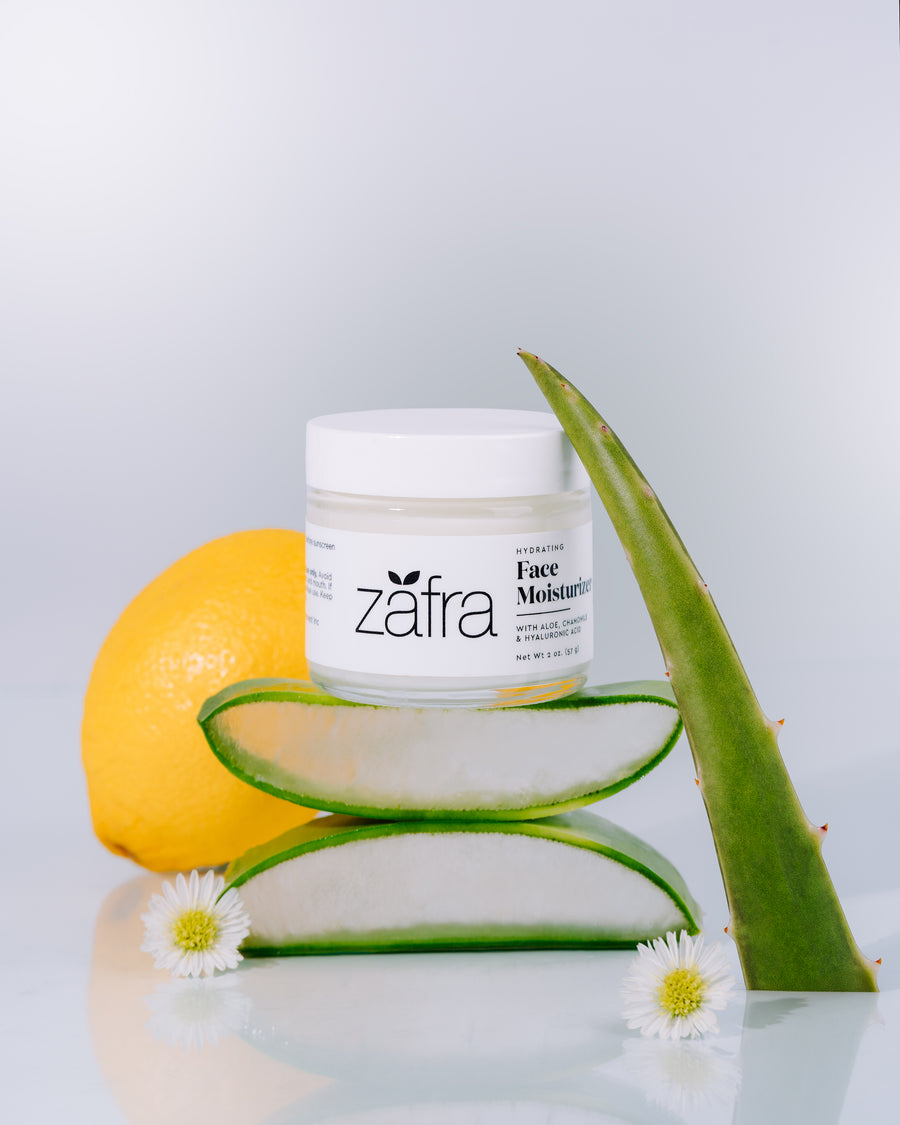
I went looking for a moisturizer built around Saccharide Isomerate and Squalane. That's how I found the Zafra Hydrating Face Moisturizer. I used it every morning for four weeks before writing a word of this.

Lunchtime came, and my cheeks didn't feel tight. I actually noticed the absence of it.
My skin tone looked more even. That's the Niacinamide and Vitamin C at work.
I stopped thinking about my skin during the day. After years of checking it in every mirror, that's not small.
Individual experience. Results vary.
I'm not the only one
"Deep hydration that lasts all day long."
"This turned my flaky winter skin into actual softness."
"I have super sensitive skin and this is the only one I trust now."
"Smells clean, not perfumey. Just right."
Is it right for you? An honest answer.

Made for you if…
Maybe not if…
The 30-second label test, even if you never buy ours
Pick up the moisturizer you're using now and check the ingredient list. Tick each one you find: